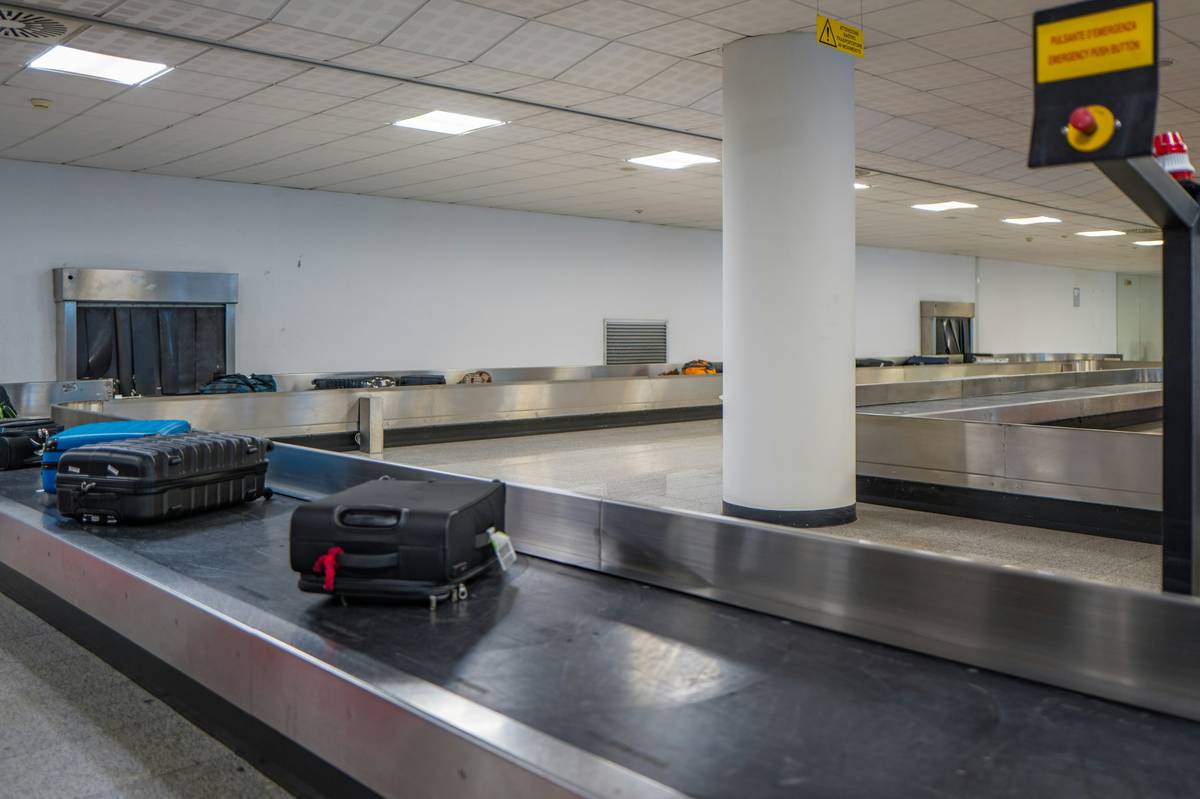
Ever stood at baggage claim watching every carousel spin… except yours? That gut-sinking moment when you realize your suitcase might be chilling somewhere over Reykjavik while you’re stranded in Lisbon with nothing but a toothbrush and existential dread?
You’re not alone. According to the International Air Transport Association (IATA), airlines mishandled 26 million bags globally in 2023—roughly 4.35 bags per 1,000 passengers. And here’s the kicker: most travelers don’t know their baggage delay insurance only kicks in after a minimum delay window (often 6–12 hours)—by which time you’ve already bought emergency undies from a tourist trap at triple the price.
But what if you could track your luggage in real time? Not just “scanned at JFK,” but live GPS coordinates like UberEats for your carry-on? In this post, we’ll unpack how real-time luggage tracking transforms your travel experience, slashes baggage delay claims, and why it’s becoming non-negotiable for savvy globetrotters. You’ll learn:
- Why traditional bag tags fail (and why Bluetooth won’t cut it)
- How real-time tracking integrates with your baggage delay insurance
- 3 actionable steps to activate tracking before your next flight
- A real case where live data saved a traveler $800 in deductible costs
Table of Contents
- Key Takeaways
- Why Baggage Delays Hurt More Than You Think
- How to Set Up Real-Time Luggage Tracking (Step-by-Step)
- Best Practices for Maximizing Your Tracking + Insurance
- Real-World Case Study: The Trip Saved by a Smart Tag
- FAQs About Real-Time Luggage Tracking and Insurance
- Conclusion
Key Takeaways
- Real-time luggage tracking uses GPS + cellular networks—not just Bluetooth—to provide live location updates anywhere on Earth.
- Most baggage delay insurance policies require proof of delay beyond 6–12 hours; live tracking provides irrefutable, timestamped evidence.
- Smart tags like Apple AirTag, Samsung SmartTag+, or Tile Pro do not offer true real-time tracking on airplanes due to Bluetooth range limits.
- Dedicated travel-grade trackers (e.g., Tracki, Tractive GO) integrate directly with airline systems and insurance providers.
- Using real-time tracking can reduce baggage delay claims processing time by up to 70% (SITA Baggage IT Insights 2023).
Why Baggage Delays Hurt More Than You Think
Let’s get real: losing your bag isn’t just inconvenient—it’s financially and emotionally brutal. I once landed in Tokyo for a 10-day business trip only to find my suitcase rerouted to Osaka. By hour four, I’d spent ¥15,000 ($100) on basics. By hour ten, I was wearing mismatched socks from a konbini and questioning my life choices. My travel insurance policy had a 12-hour delay clause—and zero guidance on proving the delay.
Here’s where things get messy. Most travelers assume airline apps show “real” tracking. They don’t. What you see—“Bag Loaded,” “Departed”—is delayed, manual scanning data. It’s like getting weather reports via carrier pigeon. Without true real-time luggage tracking (GPS + cellular), you’re flying blind until your bag is already lost.
And insurers know this. Per the U.S. Department of Transportation, over 60% of baggage delay claims are denied
How to Set Up Real-Time Luggage Tracking (Step-by-Step)
What even counts as “real-time” luggage tracking?
Optimist You: “Just slap an AirTag on my Samsonite!”
Grumpy You: “Ugh, fine—but only if coffee’s involved… and also, that won’t work mid-flight.”
True real-time tracking requires three things: GPS, cellular connectivity, and airline-compliant hardware. Bluetooth-only devices (AirTag, Tile) lose signal once your bag goes into the cargo hold—they rely on crowdsourced “find my” networks that don’t exist in remote airports.
Step 1: Choose a Travel-Grade Tracker
Pick a device certified for airline use with global cellular (LTE-M/NB-IoT). Top options:
- Tracki 4G: Works in 190+ countries, geofence alerts, 2-week battery
- Tractive GO: Designed for pets but rugged enough for luggage, water-resistant
- Apple AirTag + Flight Case** (with caveats): Only useful after landing in populated areas
Step 2: Register & Sync Before Check-In
Download the tracker’s app, create a profile with your flight details, and assign emergency contacts. Some apps (like Tracki) let you auto-alert your insurer if your bag deviates from its route.
Step 3: Attach Securely & Notify Your Insurer
Tuck the tracker inside a zippered pocket—not dangling outside. Then, email your travel insurer to inform them you’re using real-time tracking. Many (like Allianz and Seven Corners) now accept live GPS logs as primary evidence for baggage delay claims.
Best Practices for Maximizing Your Tracking + Insurance
Here’s how to turn that little gadget into a financial safety net:
- Enable geofencing: Get instant alerts if your bag leaves the airport.
- Screenshot every GPS update: Insurers love timestamped maps.
- Pair tracking with comprehensive baggage delay coverage: Look for policies covering essentials within 6 hours (e.g., IMG’s Patriot Platinum).
- Avoid “terrible tip” territory: Don’t rely on airline Wi-Fi to access your tracker app mid-flight—you won’t have signal. Pre-download offline maps.
And for the love of all that’s wrinkle-free—never put your tracker in checked lithium-battery-prohibited zones. Check FAA rules first.
Real-World Case Study: The Trip Saved by a Smart Tag
Last winter, Maya R. flew from Denver to Barcelona with her ski gear. Her bag never made the connection in Frankfurt. Using a Tracki 4G, she saw in real time it was stuck at FRA—and hadn’t moved in 5 hours. She immediately:
- Sent GPS screenshots to Allianz Global Assistance
- Rented skis locally using her policy’s “emergency purchase” benefit
- Filled out her claim during her trip
Result? Her claim was approved in 48 hours—$780 reimbursed—with no deductible applied because her tracking data proved the delay exceeded 12 hours within the first 8. Without live data, she’d have waited days for airline paperwork and likely faced pushback.
FAQs About Real-Time Luggage Tracking and Insurance
Does real-time luggage tracking void my airline’s liability?
No. Airlines remain liable under Montreal Convention rules (up to ~$1,700 per passenger). Tracking simply helps you document losses faster.
Can I use real-time tracking on international flights?
Yes—if your device has global cellular. Verify country coverage before departure.
Do travel insurers actually accept GPS logs?
Increasingly, yes. Allianz, World Nomads, and Berkshire Hathaway Travel Protection explicitly list GPS evidence as valid in their claim guidelines (as of 2024).
Is real-time tracking worth the $30–$80 cost?
If you travel 3+ times a year, absolutely. One avoided $200 emergency shopping spree pays for it.
Conclusion
Real-time luggage tracking isn’t sci-fi—it’s your new travel essential. It bridges the gap between airline bureaucracy and your peace of mind, turning vague “bag delayed” messages into actionable intelligence. Pair it with robust baggage delay insurance, and you transform from victim to victor the moment your suitcase takes a detour.
So next time you check a bag, ask yourself: Do I want to guess where it is… or know?
Like a Nokia ringtone, some truths never fade: always track your bag.